

This page has been automatically translated. Please refer to the page in French if needed.
Energy label
From 1 Jan 2027
Recalculation of the DPE: is your home affected?
Publié le 01 septembre 2026 - Public Service / (Prime Minister)
The calculation of the energy performance diagnosis will evolve from 1er January 2027. This will have consequences for some homeowners, particularly regarding the possibility of renting out their real estate. Public Service tell you more.
From 1er January 2027, one of the values used for the calculation Energy Performance Diagnostics (EPD) changes: for electricity, the value of the conversion factor from final energy to primary energy will be 1.7 (compared to 1.9 currently).
Which dwellings are affected by this development of the DPE?
All dwellings use at least some electricity (for lighting, in particular). Part of the dwellings also use this energy source to:
- heating;
- air conditioning;
- the production of domestic hot water.
In these dwellings that use electricity for many uses, it is possible that the energy label of the DPE improves by one class, or even by 2 classes in rare cases (small dwellings), following the evolution of the 1er January 2027. Some dwellings may therefore be removed from the status of « energy sieve » (Class F or G of the DPE).
The improvement of the label of the DPE will not be systematic; in any case, no housing will see its label degraded because of the change of the 1er January 2027.
Reminder
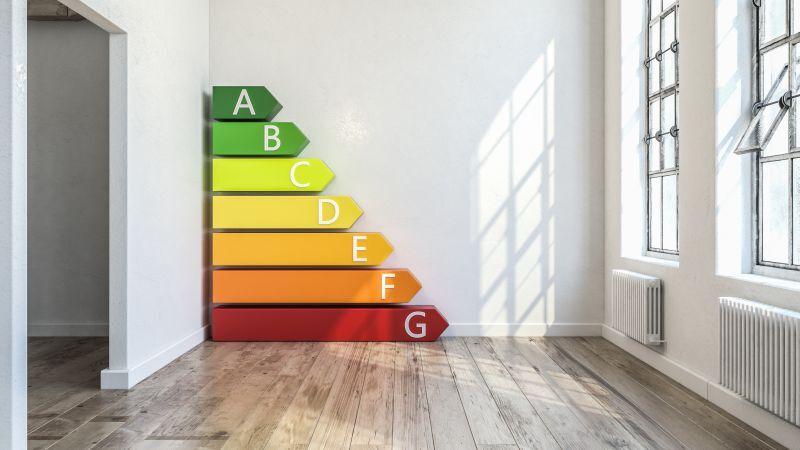
The DPE provides information on the energy and climate performance of a dwelling, with labels ranging from A (very energy efficient dwelling) to G (very energy intensive dwelling).
What are the consequences for homeowners?
The energy label obtained at the DPE has consequences on the leasing of real estate. Indeed, since the 1ster January 2025, dwellings located in metropolitan France whose energy performance diagnosis corresponds to the letter G can no longer be offered for rent. This ban on placing the most energy-intensive properties on the rental market will extend to:
- to dwellings classified F from 1er January 2028;
- to dwellings classified E from 1er January 2034.
To learn more about the evolution of the calculation of the DPE, and in particular about the consequences that this can have on your energy renovation project, you can consult frequently asked questions on the portal for energy and environmental regulations for buildings.
FYI
EPDs published as of 1er January 2027 automatically takes into account the new value of the electricity conversion factor. The EPS already completed remain valid for 10 years. If the recalculation allows an improvement in the ranking, it will be possible to update your EPD for free, without a new visit from the diagnoser, on the website of the EPD-Audit Observatory of Ademe.
Additional topics
Agenda
À partir du 1 sept. 2026
Rénovation énergétique
Publié le 27 août 2026
À partir du 1 sept. 2026
Réforme des retraites
Publié le 17 juillet 2026