
Development tax (AT)
Verified 01 January 2026 - Public Service / Directorate of Legal and Administrative Information (Prime Minister)
You have obtained a building permit and are looking for information on the development tax you have to pay? We bring you the information on its application, its calculation and the steps to be taken.
General case
For which works is the development tax payable?
The development tax is charged to you for the following operations:
- Construction, reconstruction, expansion of a building
- Development or installation (e.g. outdoor parking, swimming pool, wind turbine, camping pitches)
- Change of destination from exempt premises to taxable premises (e.g. transforming agricultural premises into housing).
It is payable following a city planning authorization:
The tax is also payable in the event of construction or development without authorization or in breach of the authorization granted.
Who has to pay the development tax?
You must pay the tax if you are in one of the following situations:
- Beneficiary of the authorization to build or develop
- Responsible for illegal construction
- Beneficiary of transferring an authorization.
Who collects the development tax?
The development tax is composed of communal share and a departmental departure which are paid to the Directorate-General for Public Finance (DGFIP). The tax department then sends it to the municipality and department concerned.
A taxable value is assigned to your project.
Percentages (municipal, departmental) are applied to the defined value. The sum of the results obtained gives the amount of the development tax.
What is the applicable rate?
The annual rate of the municipal share may vary from 1% à 5%. It can reach until 20% in certain sectors.
The annual rate of the departmental share is the same for the whole department. It is fixed at 2.5% at most.
As the case may be, the tax is payable at the rate applicable on one of the following dates:
- Issuance of building permit or to develop
- Issuance of amending permit
- Date of a tacit permit to build or develop
- Decision not to oppose a prior declaration
- Report on the completion of constructions carried out without authorization or in breach.
What is the calculation method according to the nature of the project?
The development tax is calculated differently depending on your project:
Répondez aux questions successives et les réponses s’afficheront automatiquement
Construction Project
To calculate the tax of a construction, the following data are taken into account:
- Number of m² of taxable area
- Value per m² fixed for the year (in 2026 it is €892)
- Municipal tax rate (variable per municipality and year)
- Departmental rate (variable by department and year).
The formula is:
(taxable area x fixed value x communal or intercommunal rate) + (taxable area x fixed value x departmental rate)
Example :
You would like to know the development tax to be paid for a construction of a surface of 50 m² enclosed, covered, under a ceiling height greater than 1 m 80:
You multiply the number of m2 (50) by the value at m2 (€892):
50 X €892 = 44,600
You multiply this result by the percentage decided by your commune (communal rate) and by the percentage decided by your department (departmental rate).
If, for example, a communal rate of 3% and a departmental rate 2.5%, we obtain:
€44,600 X 3% = €1,338
€44,600 X 2.5% = €1,115
The sum of these 2 results gives the amount of the tax: €1,338 +€1,115= €2,453.
The fixed value of each m² of taxable area shall be reviewed annually in accordance with theCCI: titleContent . In 2026, it is €892.
FYI
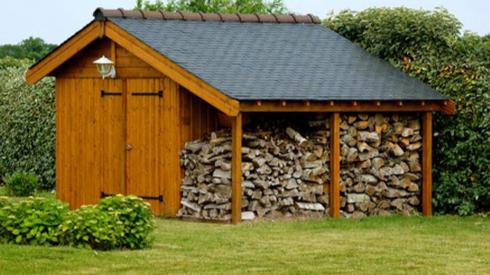
A pergola, an arbor or a terrace are not taxable, as they are not enclosed and covered. On the other hand, a garden shed or a closed and covered veranda are taxable.
You can do a simulation of the amount of your development tax:
City planning tax simulator (development tax and preventive archeology tax)
Development or installation project
The taxable value of your project is calculated:
- or per unit (tent pitch, parking space, wind turbine...),
- or per m² of surface area (swimming pool, photovoltaic panel...).
The percentages (rates) communal and departmental are applied to this value.
The sum of these 2 results constitutes the amount of the tax.
Type of development or installation | Lump sum value |
|---|---|
Leisure tent, caravan and mobile home pitches on a campground or natural camping area | €3,000 by location |
Light leisure accommodation | €10,000 by location |
Swimming pool | €251 per m² |
Wind turbine over 12 m | €3,000 per wind turbine |
Photovoltaic panel fixed to the ground | €10 per m² of panel area |
Outdoor parking area | From €2,928 à €5,857 by location (as determined by the local authority) |
Example :
You want to know the development tax to pay for the development of 2 outdoor parking spaces:
If you take, for example, an amount of €2,928 as a fixed value per place decided by the municipality:
You multiply the number of parking spaces by €2,928 either:
€2,928 X 2 = €5,856
You must then multiply this result by the percentage decided by your municipality (municipal rate) and by the percentage decided by your department (departmental rate).
If, for example, a communal rate of 3% and a departmental rate 2.5%, we obtain:
€5,856X 3% = €175
€5,856 X 2.5% = €146
The sum of these 2 results gives the amount of the tax: €175 +€146 = €321
Please note
Thermal solar panels, which produce heat, and parking areas for 2 wheels are not taxed.
You can do a simulation of the amount of your development tax:
City planning tax simulator (development tax and preventive archeology tax)
Certain types of construction and development may be subject to abatements or the following exemptions:
- Abatement of 50%on the standard value
- Automatic and permanent exemption
- Optional exemption: the local and regional authorities may exempt, in whole or in part, certain buildings from the municipal or departmental share.
Répondez aux questions successives et les réponses s’afficheront automatiquement
Abatement
A reduction of 50% shall be applied to the standard values in the following cases:
- On the first 100 m² of a main residence and its annexes
- Accommodation or accommodation assisted
- Premises for industrial or craft use and their annexes
- Warehouses and hangars not open to the public that are commercially operated
- Covered parking lots that are commercially operated.
Automatic and permanent exemptions
Construction up to 5 m²
Any building with an area of 5 m² or less is exempt from VAT.
Reconstruction
Identical reconstruction of a building destroyed or demolished for less than 10 years
The identical reconstruction of a building destroyed or demolished for less than 10 years is exempt from VAT.
The initial construction must have been authorized.
The exterior appearance of the reconstructed building must be identical and have the same destination that the building destroyed.
Disaster Recovery
The reconstruction of damaged premises on the same ground is exempt from VAT. The new building must have a floor area equal to the old one. Adjustments may be made to comply with changes in city planning rules.
The disaster recovery of a building of the same nature on another plot is exempt from VAT.
The original land must be recognized as extremely dangerous and classified as unbuildable.
Warning
You must justify that the compensation paid for damages does not include the amount of development tax normally payable on reconstructions.
Farm or agricultural cooperative
In agricultural holdings and cooperatives, the following constructions are exempt from VAT:
- Production greenhouse
- Premises for the production and storage of products for agricultural use
- Premises to house crops, animals and agricultural equipment
- Premises for processing and packaging the products of the holding.
Equestrian center
The surface of a room used for equestrian activities (rides and storage rooms) is exempt from VAT.
The surfaces of reception buildings, office premises and all areas where commercial activity is carried out (club house, dining room) are taxed.
Social housing
Housing or social housing financed by a state-assisted rental loan (PLA-I) and very social rental housing (LLTS) in Dom are exempt from VAT.
Development prescribed by a risk prevention plan (RPP)
A layout prescribed by a RPP or Technology RPPs or a Mining RPP is exempt from VAT.
Particular area and perimeter
A construction or development carried out in a particular area or perimeter is exempt from the municipal or intermunicipal share of the TA. The departmental share remains to be paid.
These zones or perimeters are as follows:
- Perimeteroperation of national interest (ISO)
- Scope of urban partnership project (PUP)
- Collaborative Development Area (CCA).
Public service
A building used for a public service or public utility is exempt from VAT.
Parking surfaces vertically integrated into the frame
Parking-related ancillary surfaces, laid out below or above buildings or integrated into the building in a vertical plane are exempt from the TA.
Optional exemptions
Social housing
Housing or social housing financed by a rental loan assisted by the State (PLUS, PSLA, PLS) and in Dom (LLTS, LES) may be exempted from all or part of the AT according to the decisions taken by the local and regional authorities.
Construction with a zero interest loan (PTZ)
Each local authority may decide to exempt partially or totally from its share the area of a principal residential premises financed by a PTZ, within the limit of 50% of the surface beyond the 100 first m².
Industrial or artisanal construction
Each local authority may decide to exempt partially or totally from its share the surface of premises for industrial or craft use.
Other constructions
Each local authority may decide to exempt in part or in full the following constructions:
- Building classified as a historical monument or entered in the additional inventory
- Retail trade with a sales area of less than 400 m²
- Health center
- Construction and development on a site cleaned up and rehabilitated following the shutdown of an installation classified as an application to the environment code or in an area of risk of soil pollution
- Garden shed, dovecote, dovecote and garden greenhouse for non-professional use with an area of 20 m² or less, subject to prior notification.
The manner of filing and paying the fee varies if your application for city planning authorization has been filed before or after 1er September 2022.
Its amount and method of calculation remain unchanged.
Répondez aux questions successives et les réponses s’afficheront automatiquement
Filing your city planning authorization before September 1, 2022
The declaration of the elements necessary for the calculation of the development tax was made in the application for authorization that you sent to the town hall:
- Permit to build or develop
- Amending Building Permit
- Prior declaration of work.
You will receive a notice of the tax payable within 6 months from the date of the building authorization granted to you.
Where the amount of the tax is less than €1,500, you must pay it 12 months after the authorization is issued.
If it exceeds €1,500, the amount is divided into 2 equal parts.
You receive the first payment request 12 months from the date of authorization.
The second half is requested 24 months from the date of authorization.
Filing of your city planning authorization since September 1, 2022
You declare and pay the tax on different dates, if the floor area of your project is less than 5,000 m2 or if it is 5 000 m or more2 :
Project with a floor area of less than 5,000 m²
You declare the elements necessary to calculate the development tax, within 90 days after completion of your work for tax purposes, from your secure space on the tax site under the heading “Manage my real estate”.
You can also declare using a form:
Form n°6840-SD - Declaration of work for the payment of city planning fees
This form is to be sent to the property tax center on which you depend.
Where the amount of the tax is less than €1,500, you receive a one-time payment request from 90 days after the completion date of the work.
If it exceeds €1,500, it is divided into 2 equal parts. You will receive the collection documents within the following deadlines:
- From 90 days from the date of completion of your work
- 6 months after the 1re ask.
Project with a floor area equal to or greater than 5,000 m²
You declare the elements necessary for the calculation of the development tax from your secure space on the tax site in the heading “Manage my real estate” within a period of 7 months after the issue of the authorization.
You can also declare using a form:
Form n°6840-SD - Declaration of work for the payment of city planning fees
This form is to be sent to the property tax center on which you depend.
From the issuance of the authorization, you have 2 installments of the tax to pay on the following dates:
- 9e months: 50% of tax
- 18e months: 35% of the tax.
They shall be deducted from the final amount of the development tax due.
In Île-de-France
For which works is the development tax payable?
The development tax is charged to you for the following operations:
- Construction, reconstruction, expansion of a building
- Development or installation (e.g. outdoor parking, swimming pool, wind turbine, camping pitches)
- Change of destination from exempt premises to taxable premises (e.g. transforming agricultural premises into housing).
It is payable following a city planning authorization:
The tax is also payable in the event of construction or development without authorization or in breach of the authorization granted.
Who has to pay the development tax?
You must pay the tax if you are in one of the following situations:
- Beneficiary of the authorization to build or develop
- Responsible for illegal construction
- Beneficiary of transferring an authorization.
Who collects the development tax?
The development tax is a single tax composed of 3 parts:
- A communal or intercommunal part
- A departmental share
- A regional share.
Each share is established by deliberation of the local authority.
A taxable value is assigned to your project. This value is calculated by m2 surface (house, swimming pool, photovoltaic panels on the ground...).
The calculation can be done per unit if it is a development (parking space, tent site...) or an installation (wind turbine).
Percentages (municipal, departmental and regional rates) are applied to the defined value. The sum of the results obtained gives the amount of the development tax.
What is the applicable rate?
- The annual rate of the municipal share may vary from 1% à 5%.
It can reach up to 20% in certain sectors. - The annual rate of the departmental share is the same for the whole department. It is limited to 2.5% at most.
- The rate of regional share set by the Regional Council of Île-de-France may differ from one department to another within the limit of 1%.
As the case may be, the tax is payable at the rate applicable on one of the following dates:
- Issuance of building permit or to develop
- Issuance of amending permit
- Date of a tacit permit to build or develop
- Decision not to oppose a prior declaration
- Report on the completion of constructions carried out without authorization or in breach.
How is the development tax calculated according to the nature of the project?
The development tax is calculated differently depending on the nature of your project:
Répondez aux questions successives et les réponses s’afficheront automatiquement
Construction Project
To calculate the tax of a construction, the following data are taken into account:
- Number of m² of taxable area
- Value per m² fixed for the year (in 2026, it is €1,011)
- Municipal tax rate (variable per municipality and year)
- Departmental rate (variable by department and year)
- Regional rate (variable by department and year).
The formula is:
(taxable area x fixed value x municipal or inter-municipal rate) + (taxable area x fixed value x departmental rate) +(taxable area x fixed value x regional rate)
Example :
You would like to know the development tax to be paid for a construction of a surface of 50 m² enclosed, covered, greater than 1.80 m:
You multiply the number of m² (50) by the value per m2 €1,011 :
50 X €1,011 = €50,550
You multiply this result by the percentage decided by your municipality (municipal rate), then by the percentage decided by your department (departmental rate) and finally by the regional percentage (regional rate).
For example, if a communal rate of 3% , a departmental rate of 2.5% and a regional rate of 1% the following shall be obtained:
€50,550 X 3% (example of a communal rate) = €1,516
€50,550 X 2.5%(example of a departmental rate) = €1,263
€50,550 X 1%(example of a regional rate) = €505
You add these 3 results to know the amount of the tax: €1,516 +€1,263 + €505 = €3,284
The flat-rate value of each m² of taxable area shall be reviewed each year in accordance with theCCI: titleContent . In 2026, it is €1,011.
FYI
A pergola, an arbor or a terrace are not taxable, as they are not enclosed and covered. On the other hand, a garden shed or a closed and covered veranda are taxable.
You can do a simulation of the amount of your development tax:
City planning tax simulator (development tax and preventive archeology tax)
Development or installation project
The value of the project is calculated:
- or per unit (tent pitch, parking space, wind turbine...),
- or per m² of surface area (swimming pool, photovoltaic panel...).
The percentages (rates) communal, departmental and regional are applied to this value.
The development tax is the sum of these results.
Type of development or installation | Lump sum value |
|---|---|
Leisure tent, caravan and mobile home pitches on a campground or natural camping area | €3,000 by location |
Light leisure accommodation | €10,000 by location |
Swimming pool | €251 per m² |
Wind turbine over 12 m | €3,000 per wind turbine |
Photovoltaic panel fixed to the ground | €10 per m² of panel area |
Outdoor parking area | From €2,928 à €5,857by location (as determined by the local authority) |
Please note
Thermal solar panels, which produce heat, and parking areas for 2 wheels are not taxed.
You can do a simulation of the amount of your development tax:
City planning tax simulator (development tax and preventive archeology tax)
Certain types of construction and development may be subject to abatements or the following exemptions:
- Abatement of 50%on the standard value
- Automatic and permanent exemption
- Optional exemption: the local and regional authorities may exempt, in whole or in part, certain buildings from the municipal or departmental share.
Répondez aux questions successives et les réponses s’afficheront automatiquement
Abatement
A reduction of 50% shall be applied to the standard values in the following cases:
- First 100 m² of a room and its annexes for main residential use
- Accommodation or accommodation assisted
- Premises for industrial or artisanal use and their annexes
- Warehouses and hangars not open to the public commercially exploited
- Covered parking lots commercially exploited.
Automatic and permanent exemptions
Construction up to 5 m²
Any building with an area of 5 m² or less is exempt from VAT.
Reconstruction
The identical reconstruction of a building destroyed or demolished following a disaster is exempt from VAT.
The building must have been demolished or destroyed for less than 10 years.
The initial construction must have been authorized. The exterior appearance must be identical.
Disaster reconstruction of a building of the same nature on another plot of land also benefits from this exemption.
The original land must be recognized as extremely dangerous and classified as unbuildable.
Warning
You must justify that the compensation paid for damages does not include the amount of development tax normally payable on reconstructions.
Farm or agricultural cooperative
In agricultural holdings and cooperatives, the following constructions are exempt from VAT:
- Production greenhouse
- Premises for the production and storage of products for agricultural use
- Premises to house crops, animals and agricultural equipment
- Premises for processing and packaging the products of the holding.
Equestrian center
The surface of a room used for equestrian activities (rides and storage rooms) is exempt from VAT.
Social housing
Housing or social housing financed by a state-assisted rental loan (PLA-I) is exempt from VAT.
Development prescribed by a risk prevention plan (RPP)
A layout prescribed by a RPP or Technology RPPs or a Mining RPP is exempt from VAT.
Particular area and perimeter
A construction or development carried out in a particular area or perimeter is exempt from the municipal or intermunicipal share of the TA. The departmental and regional shares remain to be paid.
These zones or perimeters are as follows:
- Perimeteroperation of national interest (ISO)
- Scope of urban partnership project (PUP)
- Collaborative Development Area (CCA).
Public service
A building used for a public service or public utility is exempt from VAT.
Parking surfaces vertically integrated into the frame
Parking-related ancillary surfaces, laid out below or above buildings or integrated into the building in a vertical plane are exempt from the TA.
Optional exemptions
Social housing
Housing or social housing financed by a state-assisted rental loan (PLUS, PSLA, PLS) may be exempted from all or part of the TA according to the decisions taken by the local and regional authorities.
Construction with a zero interest loan (PTZ)
Each local authority may decide to exempt partially or totally from its share the area of a principal residential premises financed by a PTZ, within the limit of 50% of the surface beyond the 100 first m².
Industrial or artisanal construction
Each local authority may decide to exempt partially or totally from its share the surface of premises for industrial or craft use.
Other constructions
Each local authority may decide to exempt in part or in full the following constructions:
- Building classified as a historical monument or entered in the additional inventory
- Retail trade with a sales area of less than 400 m²
- Health center
- Construction and development on a site cleaned up and rehabilitated following the shutdown of an installation classified as an application to the environment code or in an area of risk of soil pollution
- Garden shed, dovecote, dovecote and garden greenhouse for non-professional use with an area of 20 m² or less, subject to prior notification.
The manner of filing and paying the fee varies if your application for city planning authorization has been filed before or after 1er September 2022.
Its amount and method of calculation remain unchanged.
Répondez aux questions successives et les réponses s’afficheront automatiquement
Filing your city planning authorization before September 1, 2022
The declaration of the elements necessary for the calculation of the development tax was made in the application for authorization that you sent to the town hall:
- Permit to build or develop
- Amending Building Permit
- Prior declaration of work.
You will receive a notice of the tax payable within 6 months from the date of the building authorization granted to you.
Where the amount of the tax is less than €1,500, you must pay it 12 months after the authorization is issued.
If it exceeds €1,500, the amount is divided into 2 equal parts.
You receive the first payment request 12 months from the date of authorization.
The second half is requested 24 months from the date of authorization.
Filing of your city planning authorization since September 1, 2022
You declare and pay the tax on different dates, if the floor area of your project is less than 5,000 m2 or if it is 5 000 m or more2 :
Project with a floor area of less than 5,000 m²
You declare the elements necessary to calculate the development tax, within 90 days after completion of your work for tax purposes, from your secure space on the tax site under the heading ‘managing my real estate’.
You can also declare using a form:
Form n°6840-SD - Declaration of work for the payment of city planning fees
This form is to be sent to the property tax center on which you depend.
Where the amount of the tax is less than €1,500, you will receive a one-time payment request from 90 days after the completion date of the work.
If it exceeds €1,500, it is divided into 2 equal parts. You will receive the collection documents within the following deadlines:
- From 90 days from the date of completion of your work
- 6 months after the 1re ask.
Project with a floor area equal to or greater than 5,000 m²
You declare from your secure space on the tax site the elements necessary to calculate the development tax within a period of 7 months after the issue of the authorization.
You can also declare using a form:
Form n°6840-SD - Declaration of work for the payment of city planning fees
This form is to be sent to the property tax center on which you depend.
From the issuance of the authorization, you have 2 installments of the tax to pay on the following dates:
- 9e months: 50% of tax
- 18e months: 35% of the tax.
They shall be deducted from the final amount of the development tax due.
Who can help me?
Find who can answer your questions in your region
For more information on this subject, you can contact Allô Service Public.
Attention: the service does not have access to users' personal files and therefore cannot provide information on their progress.
- Lundi : de 08h30 à 17h30
- Mardi : de 08h30 à 12h15
- Mercredi : de 08h30 à 12h15
- Jeudi : de 08h30 à 17h30
- Vendredi : de 13h00 à 16h15
- Service free
The informants who answer you belong to the ministry in charge of housing and city planning.
Filing of your city planning authorization since September 1, 2022
Departmental Center for Property Taxes (CDIF)Filing your city planning authorization before September 1, 2022
Departmental Directorate in charge of territories (DDT or DDTM)Filing of your city planning authorization before 1 September 2022 (Paris and neighboring departments)
Regional and interdepartmental Directorate for the Environment, Planning and Transport (DRIEAT) of Île-de-France
Objectives for financing the tax
Rates, base and exemptions
Regulations applicable to authorizations filed since 1 September 2022
Lump sum value and method of annual tax review
Tax collection procedures since September 1, 2022
Terms of collection of the tax since September 1, 2022 for a construction of 5000 m2 of surface and more
News
Taxe d'aménagement : quels montants en 2026 ?
Publié le 07 janvier 2026