

This page has been automatically translated. Please refer to the page in French if needed.
Municipal elections
Inmates' right to vote: what are the new modalities?
Publié le 22 juillet 2025 - Mise à jour le 19 février 2026 - Public Service / (Prime Minister)
Detainees who have not been deprived of their civil rights may exercise their right to vote. Various devices are made available to them to do so. As of March 2026, they will no longer be able to vote by mail in local and legislative elections. Public Service presents the new rules concerning the voting of persons in detention, which will be applied during the municipal elections of 15 and 22 march.
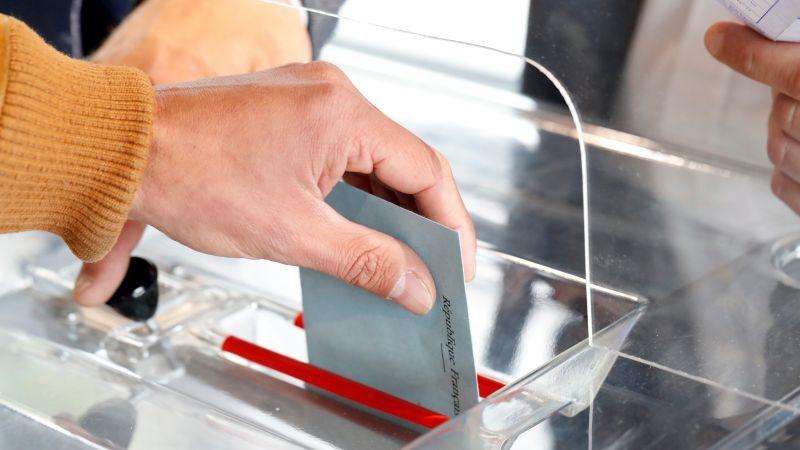
Prisoners, who have not been sentenced to a sentence depriving them of their civil rights, can exercise their right to vote by 3 means:
- by going to their polling station, as part of a one-day temporary absence (this permission cannot be granted to a person sentenced to a prison term of more than 5 years, until he has completed half of it);
- by using the proxy voting ;
- and in the presidential election, the European elections and referendums, by voting by post. To use this means of voting, the detainee must apply to be registered on the electoral list of the commune capital of the department where the prison is located. Detainees can then cast their votes by voting before polling day, by mail, in the prison.
A law of 18 July 2025 reformed the voting procedures for incarcerated persons. The new rules apply as of the municipal elections of march 15 and 22, 2026. As of this election, detainees can no longer vote by mail at the local elections (municipal, departmental, regional) and during the parliamentary elections. During these electoral renewals, they can therefore vote only as part of a temporary absence or by using the proxy voting procedure.
Please note
Detainees can therefore still use the 3 means of voting (by proxy, at the polling station during a temporary absence and by post) only during the following elections:
- presidential elections;
- European elections;
- referendums.
An evolution relating to the registration on the electoral list of a commune
The Act of 18 July 2025 also provides that, with regard to voting by proxy or at a polling station, a detainee may, from March 2026, be registered in a commune where one of his descendants (children, grandchildren, great-grandchildren) was born, is registered or has been entered on the electoral list.
In order to vote by proxy or at a polling station, a prisoner must in principle be registered in the commune of his home, or of his last residence, provided that he has lived there for at least 6 months.
By way of derogation, she could already be entered on the electoral list of certain municipalities, in particular that of her birth or the municipality where her husband, partner of Civil partnerships or cohabiting partner is entered.
Reminder
The possibility for inmates to vote by mail had been introduced by a law of 27 december 2019.
Before the adoption of this law by the parliament, the Council of State had indicated in an advisory opinion that the vote of persons detained in the commune capital of the department of the prison led "to break any personal link between the voter and the commune of registration, which disregards the tradition of our electoral law". This was reminded in the National Assembly in May 2025, when the bill to reform the voting procedures for detainees was presented.
Additional topics
Service Public
Service Public
Agenda
À partir du 1 nov. 2026
Énergie
Publié le 12 octobre 2026
Jusqu'au 23 oct. 2026
Vie scolaire
Publié le 09 octobre 2026
À partir du 1 nov. 2026
Arrêt de travail
Publié le 08 octobre 2026
Du 15 oct. au 20 oct. 2026
Impôts locaux
Publié le 22 septembre 2026