

This page has been automatically translated. Please refer to the page in French if needed.
Labor regulation
Heat: what obligations for the employer?
Publié le 27 mai 2026 - Public Service / Directorate of Legal and Administrative Information (Prime Minister)
In order to protect employees exposed to heat risks, the employer must implement new prevention measures since 2025. Explanations.
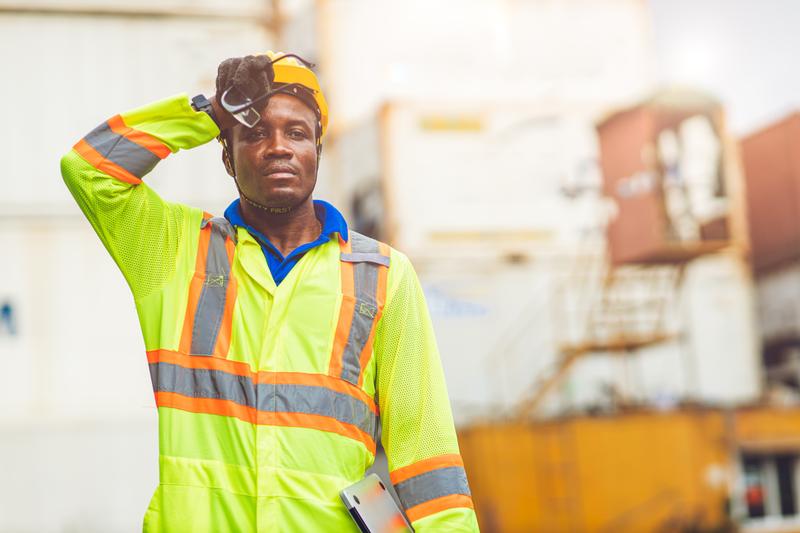
The decree of 27 May 2025 introduced new prevention obligations for the employer. These provisions shall apply since 1er July 2025.
The aim is to protect employees from heat-related risks, such as:
- the deterioration of working conditions;
- accidents at work;
- fever;
- migraine;
- cramps;
- dehydration, heat stroke...
What are the vigilance thresholds?
Several meteorological vigilance thresholds were set by Météo-France in an order of May 27, 2025:
- green vigilance : seasonal surveillance without particular vigilance;
- yellow vigilance : heat peak (exposure over a period of 1 to 2 days to intense heat posing a risk to human health due to working conditions or physical activity);
- orange vigilance : heatwave period (intense and long-lasting heat that could pose a health risk to the entire exposed population);
- red vigilance : period of extreme heat waves (exceptional heat waves due to their duration, intensity and geographical scope, which have a strong health impact on the entire population or could lead to the appearance of side effects of business continuity).
One ‘episode of intense heat’ corresponds to reaching the threshold of the levels of yellow, orange or red alertness.
The ‘heatwave periods’, which entitle to compensation for work stoppages in construction companies, are characterized by reaching the threshold of the orange or red alert.
What are the new preventive measures?
The decree of May 27, 2025 lists a list of measures that the employer must take to fight against intense heat episodes :
- the use of work processes that do not require exposure to heat (or require less exposure);
- changing thelayout and thelayout workplaces and workstations;
- adaptation the organization of work (including working hours) to limit the duration and intensity of exposure. Rest periods may be provided;
- implementation of technical means to reduce solar radiation on exposed surfaces or to prevent heat build-up in work spaces (e.g. sun visors, fans, mist sources...);
- increaseas far as possible, thefresh drinking water making available to workers. The employer must provide employees with a quantity of fresh drinking water sufficient and providing a means for keep water for drinking cool close to workstations;
- choice of appropriate work equipment to maintain a stable body temperature;
- supply ofpersonal protective equipment to limit or compensate for the effects of high temperatures or to protect against the effects of solar radiation;
- information and training workers on the one hand, on the conduct to be taken in the event of high heat and, on the other hand, on the correct use of work equipment and personal protective equipment so as to reduce their exposure to heat to a level ‘as low as technically possible’.
The decree adds that in the absence of running water, the employer must ensure the availability of at least 3 liters of water per day per worker.
FYI
In order to ensure the health and safety of employees in the event of high heat, the employer must integrate the risk of high heat into the single occupational risk assessment document (DUERP).
Additional topics
Agenda
À partir du 1 nov. 2026
Énergie
Publié le 12 octobre 2026
Jusqu'au 23 oct. 2026
Vie scolaire
Publié le 09 octobre 2026
À partir du 1 nov. 2026
Arrêt de travail
Publié le 08 octobre 2026
Du 15 oct. au 20 oct. 2026
Impôts locaux
Publié le 22 septembre 2026