

This page has been automatically translated. Please refer to the page in French if needed.
Food security
Mushroom picking: how to avoid poisoning?
Publié le 14 octobre 2026 - Mise à jour le 20 octobre 2026 - Public Service / (Prime Minister)
Confusion between edible and toxic species, poor conservation, inappropriate cooking... Poisonings related to fungi are on the rise as early as September. The National Agency for Food, Environmental and Occupational Health and Safety (ANSES) recalls the precautions to be taken to collect and consume mushrooms safely.
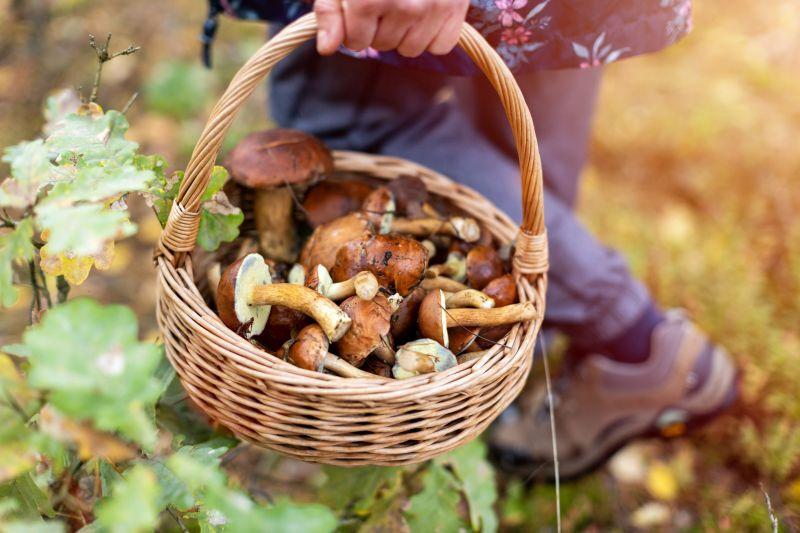
In September 2026, as reported by the National Agency for Food, Environmental and Occupational Health and Safety (ANSES), nearly 500 poisonings related to the collection and consumption of mushrooms have been reported to the Poison Control Centers, and more than 200 poisonings have already been recorded since October 1.
Poisoning is mainly due to confusion between an edible and a toxic species, but can also result from poor preservation of fungi, consumption of altered or undercooked specimens.
The consequences of poisoning on health can be serious and lead to hospitalization: severe digestive disorders, kidney complications, liver damage that may require a transplant. Some may require hospitalization in intensive care, and sometimes lead to death.
To limit these risks, ANSES invites you to respect some recommendations.
Warning
Confusions between multiple species can cause serious poisoning, especially between chanterelles and the clitocyb of the olive tree. The latter leads to digestive disorders sometimes severe that can cause dehydration. Note also that phalloid amanite, responsible for sometimes fatal hepatitis, can be confused with a coulemelle.
Before picking
- Provide a wicker basket, a case or a cardboard to deposit his mushrooms. Never use plastic bags, they speed up rot. Your container should be large enough to separate the different species and thus avoid mixing potentially poisonous mushroom pieces with edible mushrooms.
- Choose a picking place away from polluted sites (roadsides, industrial areas, landfills, pastures...), because fungi absorb the pollutants to which they are exposed.
- Find out about the structures that can help identify a harvest in case of doubt: some pharmacists or mycology associations (study of fungi) in your area.
During picking
- Pick up only the mushrooms you know perfectly: some highly toxic poisonous mushrooms are very similar to edible species.
- Be vigilant: Poisonous mushrooms can grow where you picked edible mushrooms another year.
- Collect only specimens in good condition and remove the entire fungus (foot and hat) to allow identification.
- Avoid collecting young specimens that have not finished forming, which promotes confusion, and old specimens that may be damaged or colonized by worms or insects.
Reminder
The National Forestry Office (NFB) points out that mushrooms must be collected without degrading the soil or vegetation and that local regulations must be respected, as some municipalities or owners may limit or regulate harvesting.
After picking
- Wash hands thoroughly.
- Take a photo of your crop before cooking: it will be useful in case of intoxication to decide on the appropriate treatment.
- In the slightest doubt about the condition or identification of one of the harvested mushrooms, do not consume the harvest before having it checked by a pharmacist or a mycology association.
- Store mushrooms in the refrigerator (maximum 4°C) and consume them within 2 days after picking.
- Never consume raw mushrooms and cook each species separately and sufficiently: 20 to 30 minutes in a pan or 15 minutes in boiling water with rejection of cooking water. This destroys parasites and bacteria and makes some species edible (shiitake, morels, some boletus).
- Eat mushrooms in reasonable quantities, 150 to 200 grams per adult per week.
- Never offer harvested mushrooms to young children and avoid doing so to the elderly (high risk of dehydration and death in case of intoxication) and pregnant women (certain bacteria or parasites such as toxoplasmosis, at risk for the fetus, are present in the earth and could infect them).
- Do not consume mushrooms identified by a smartphone mushroom recognition app alone, due to the high risk of error.
- Do not consume mushrooms marketed by non-professionals (« on the sly »).
What to do in case of symptoms?
If symptoms occur following consumption of mushrooms (abdominal pain, diarrhea, vomiting, nausea, tremor, dizziness, visual disturbances in particular), an immediate emergency call should be made. poison control center mentioning this consumption:
- Angers: 02 41 48 21 21
- Bordeaux: 05 56 96 40 80
- Lille: 08 00 59 59 59
- Lyon: 04 72 11 69 11
- Marseille: 04 91 75 25 25
- Nancy: 03 83 22 50 50
- Paris: 01 40 05 48 48
- Toulouse: 05 61 77 74 47
Record the time of the meal and the onset of the first signs, and keep the leftovers for identification.
The time to onset of symptoms varies from a few hours after consumption to more than 12 hours. The condition of the intoxicated person may worsen rapidly.
In case of vital distress: loss of consciousness, respiratory distress... call 15 or the 112.
Warning
Poison control centers have found that in some cases, the confusion between species had been fostered by the use of fungus recognition apps on smartphones who had given erroneous identifications on the mushrooms picked.
Additional topics
National Forestry Board (NFB)
Ministry of Health
Agenda
À partir du 1 nov. 2026
E-commerce
Publié le 30 octobre 2026
À partir du 1 nov. 2026
Sécurité routière
Publié le 20 octobre 2026
À partir du 1 nov. 2026
Agirc-Arrco
Publié le 15 octobre 2026
À partir du 1 nov. 2026
Arrêt de travail
Publié le 08 octobre 2026